Jiujie Machine
1 / 5

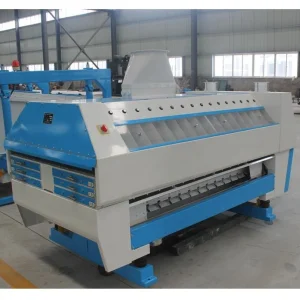
Flour Production Line Cleaning & Conditioning: Purifying, Cleaning, De-stoning, De-husking & De-branning
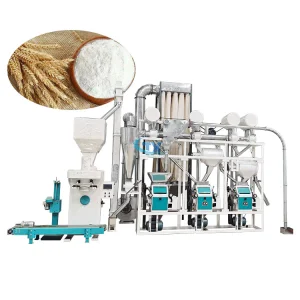
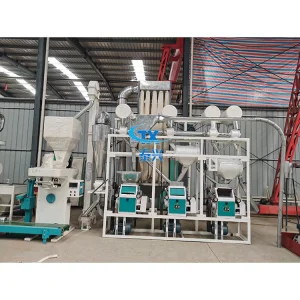
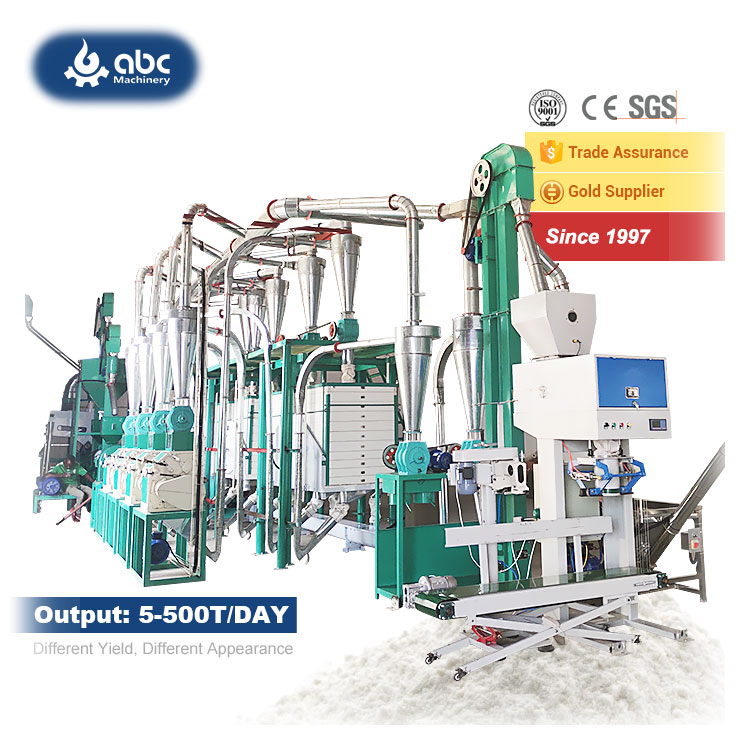
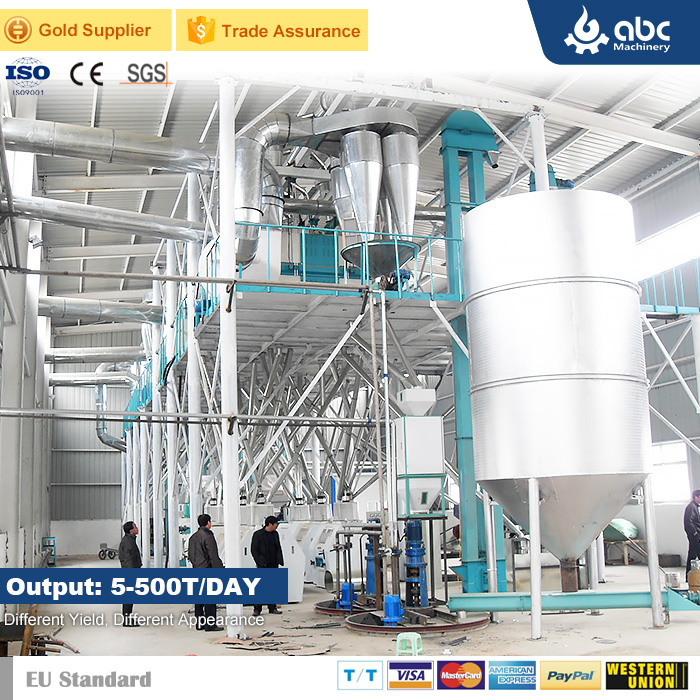
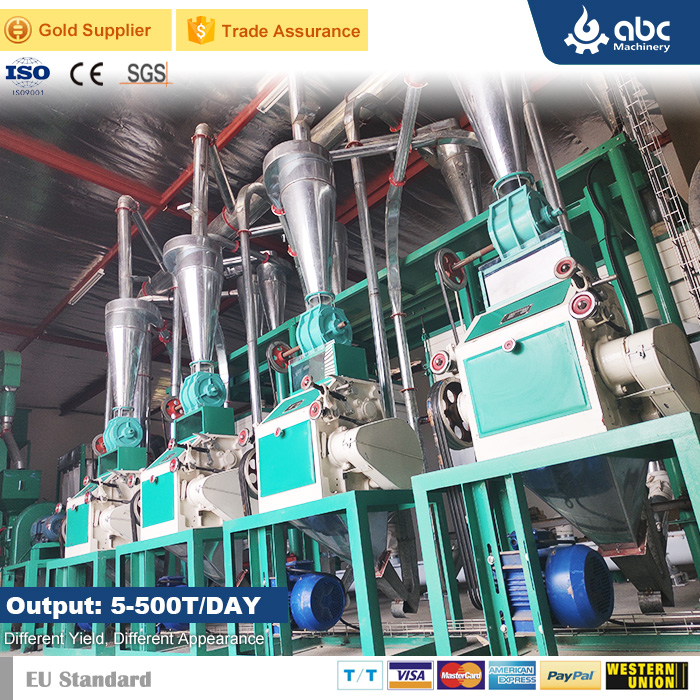
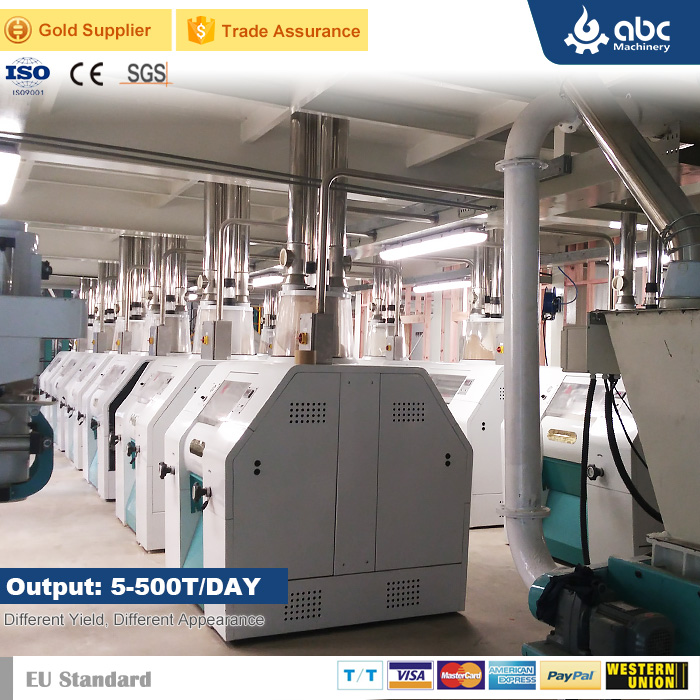
We are a leading grain processing machinery manufacturer in China. We offer not only single flour mill machines, but also complete small flour mill plants (10TPD ~ 30TPD) and full sets of flour processing plants (30-160TPD) for processing wheat, corn, cereals, and more.
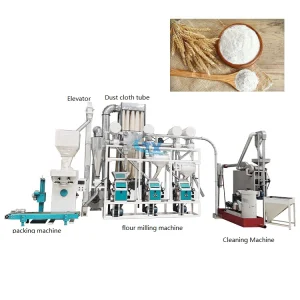
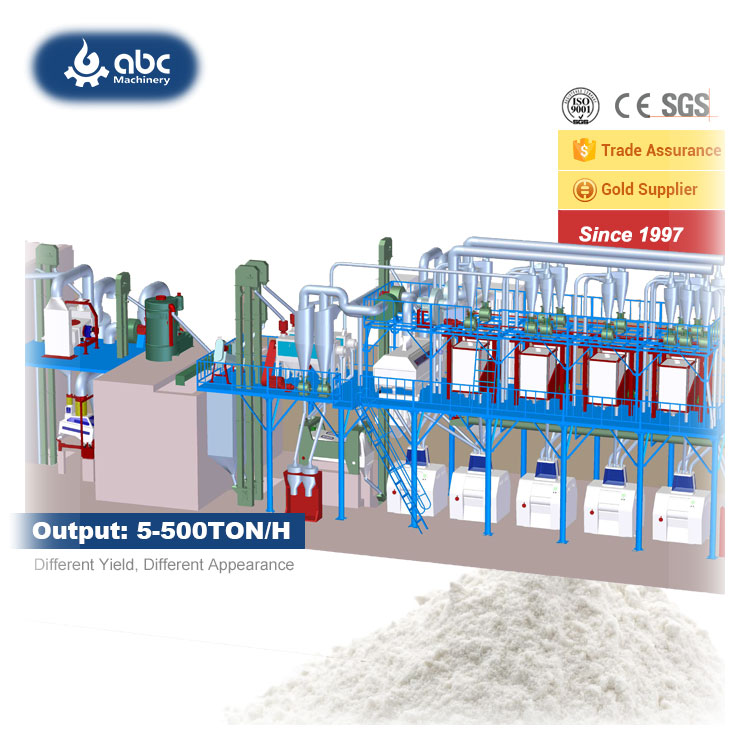
The process begins with purifying, cleaning, de-stoning, de-husking, and de-branning, followed by grinding, crushing, roller milling, sifting, and sieving. The final stages include moisture conditioning, bran separation, flour blending, and packing. The system is designed to handle yellow corn, yellow maize, white corn, and white maize in addition to wheat, making it highly versatile for multiple raw materials. Built with features optimized for high capacity, large scale, and high output, this production line is suitable for both commercial and industrial projects. Relying on reliable quality, reasonable pricing, and professional expertise, this is the ideal choice for your milling project.
Designed to operate on 380V to 480V systems, the flour production lines utilize electric engines, AC motors, and motor-driven configurations. The structure is built from high-carbon steel with industrial-grade layouts. Automation levels include fully-automatic, continuous-operation, integrated control, and all-in-one systems, fully supported by complete layouts to meet large capacity and heavy-duty requirements.
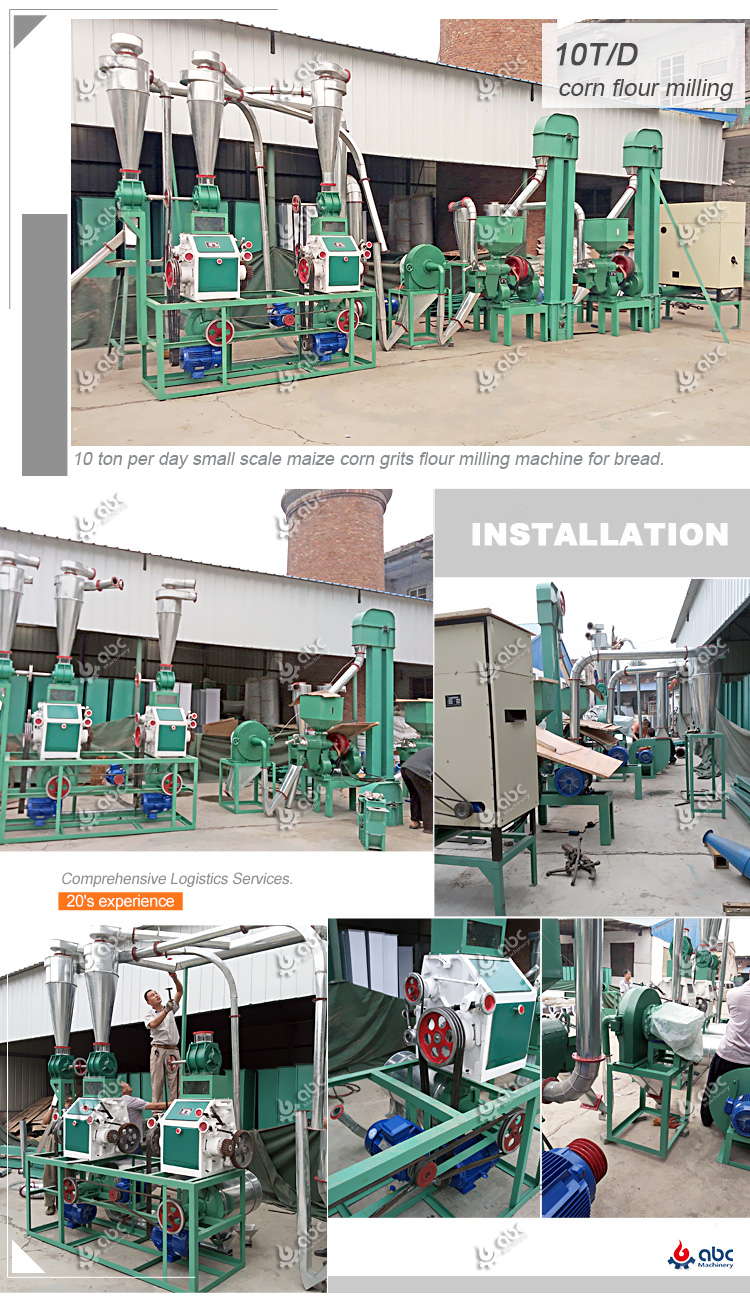
Single wheat or corn milling machines can be used independently or combined with auxiliary equipment in commercial flour milling plants. When planning to start a milling business, layout technology and process flow deserve the utmost consideration.
Sieving → Destoning → Peeling → Crushing → Grinding → Sieving & Cleaning → Packing
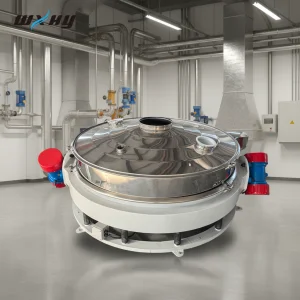
Maize is conveyed into the combined sieving and stoning machine where impurities and stones are eliminated.
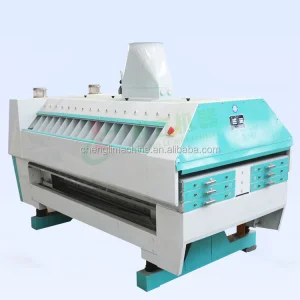
The maize enters the peeling machine to remove clod, dust, and outer skins.
The peeled maize is crushed into large particles in preparation for fine milling.
Particles are elevated into the stock bin and fed into the 3-phase maize milling machine.
After grinding, the flour is sifted. Oversized particles return to the stock bin for secondary grinding.
The finished flour is packed and ready for distribution.
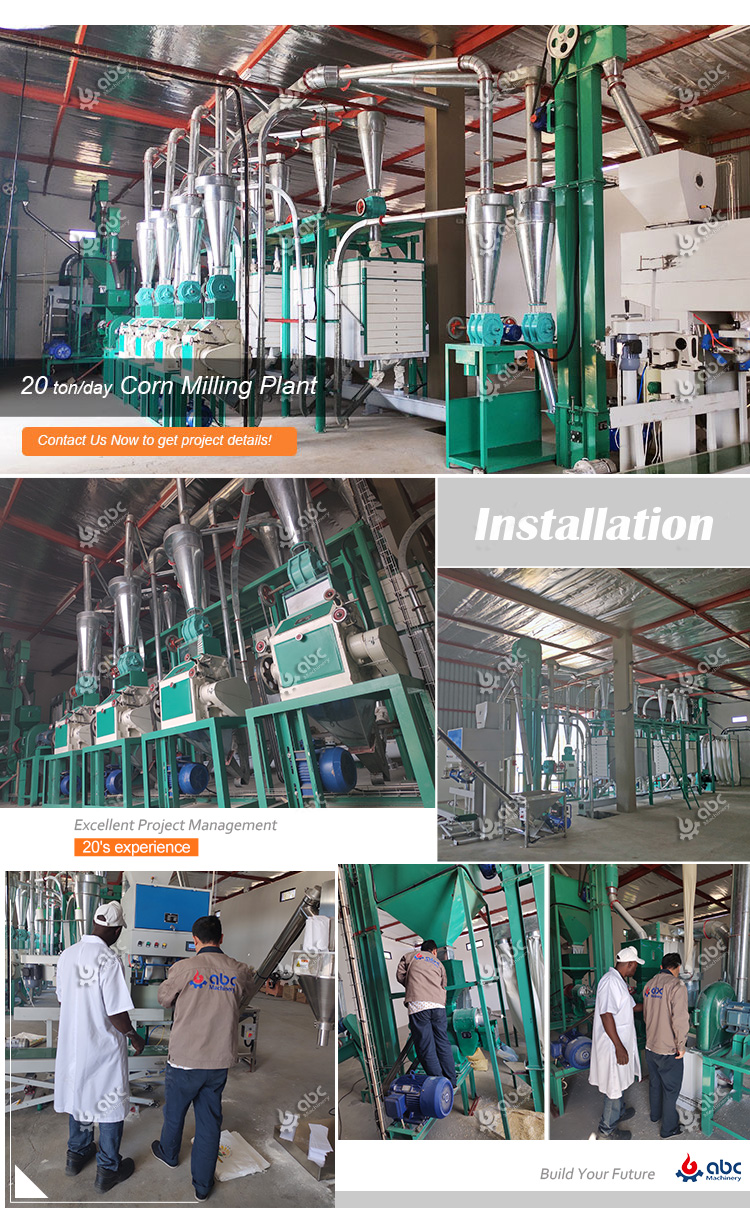
Comprehensive services include installation, commissioning, operational training, and online support, paired with after-sales packages featuring spare parts supply, lifetime technical support, and round-the-clock customer service. The production line is a hot-selling product for setups across Ethiopia, Romania, Kyrgyzstan, Algeria, and beyond, offering competitive price levels from global manufacturing sources.
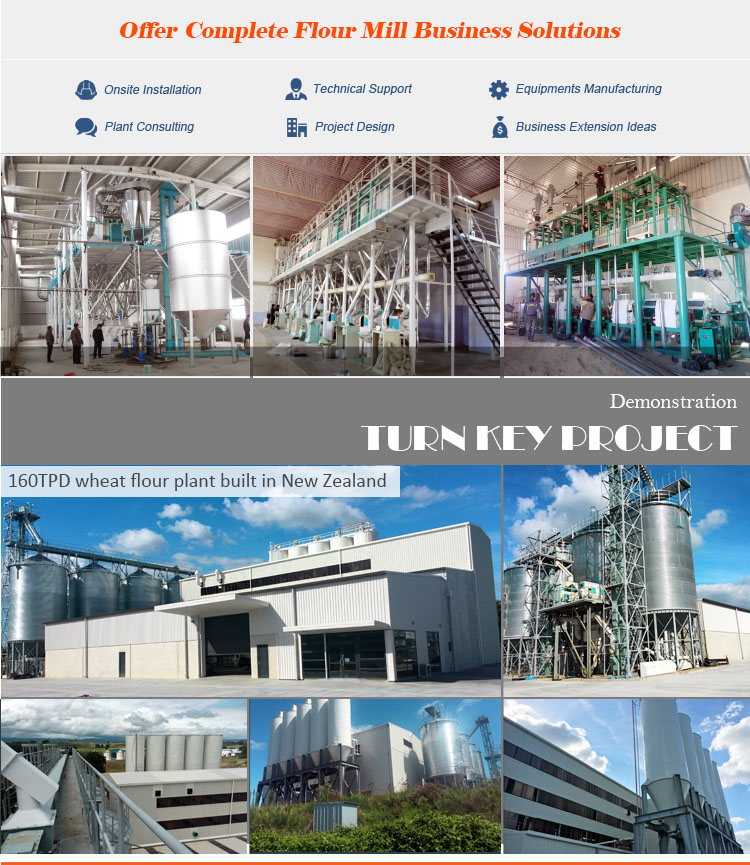
We have built many successful small and large flour plant projects globally:
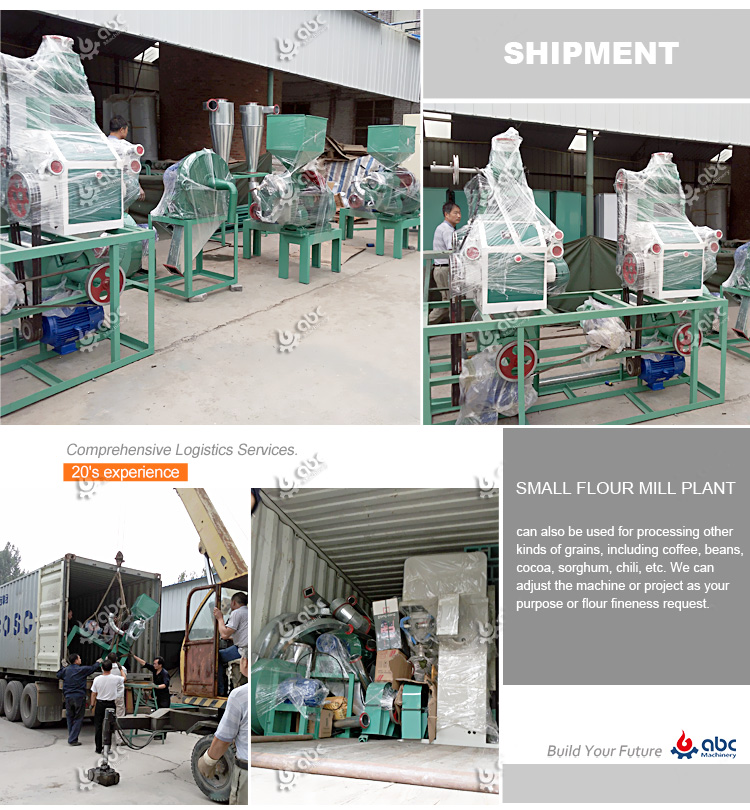
The grain processing machinery is designed with a fluted disc structure. High-speed rotation of moving and fixed plates within the chamber grinds grain seeds into fine powder. The flour milling equipment delivers smooth running, a simple and sturdy structure, and a powerful crushing effect. It can serve as a grain milling machine, wheat milling machine, maize milling machine, rice mill, or cassava processor.
After grinding, materials are expelled directly from the milling chamber. To obtain different raw material outputs, varying mesh sizes can be applied to the sieve plates. Our advanced systems include a grinder mill or roller mill, cleaning machine, peeling and splitting machine, threshing machine, flour machine, sieve/screening machine, packing machine, and flour bins or silos.

Our machinery is highly versatile and handles wheat, yellow and white corn/maize, rice, sorghum, millet, beans, cassava, chickpeas, soybeans, chili, and various spices.
We supply small flour mill plants with capacities ranging from 10 to 30 tons per day (TPD), and complete large-scale commercial milling plants with capacities from 30 to 500 tons per day.
The cleaning section uses sieving, threshing, de-mixing, wetting, magnetic selection, wheat brushing, and wind selection to eliminate all impurities, protecting both flour quality and the machinery.
Yes. By switching the sieve plates to different mesh sizes inside the grinding chamber, you can easily control and adjust the output size of the flour or grits.
The systems operate on 380V to 480V electrical connections. They feature heavy-duty AC motors and high-carbon steel structures, with support for fully-automatic or integrated control systems.
Yes, we provide comprehensive turnkey support including engineering design, equipment installation, commissioning, operational training, lifetime technical support, and spare parts supply.