Setting up a small automatic flour packing line in China requires more than choosing a filling machine. The right system must match flour type, bag size, production speed, factory space, and local operating conditions. This guide explains how to set up a small scale automatic flour packing line with practical details from equipment selection to commissioning.
Walter Soroka, author of Fundamentals of Packaging Technology, describes packaging as “the science, art, and technology of enclosing and protecting products.” That principle is important for flour. A reliable line may include a flour hopper, screw auger filler, automatic bag former, heat sealer, date coder, checkweigher, and dust-control equipment. Each component affects accuracy, cleanliness, and maintenance. A 500-gram bag may need different settings from a 25-kilogram sack.
Start with a clear production target. Define bags per minute, acceptable weight tolerance, flour moisture, and packaging material. Then compare Chinese suppliers through factory audits, sample tests, wiring reviews, and after-sales support. Ask to see the machine running with your actual flour. Videos are useful, but they are not enough.
Small errors matter. A poorly positioned dust filter can dirty sensors and reduce sealing quality. An oversized machine can waste floor space and energy. An undersized feeder may create unstable output. Some plans look efficient on paper but fail during cleaning or product changeovers. Therefore, include operator training, spare parts, safety guarding, and installation time before signing a purchase agreement. The most practical line is not always the fastest; it is the one your team can operate consistently.
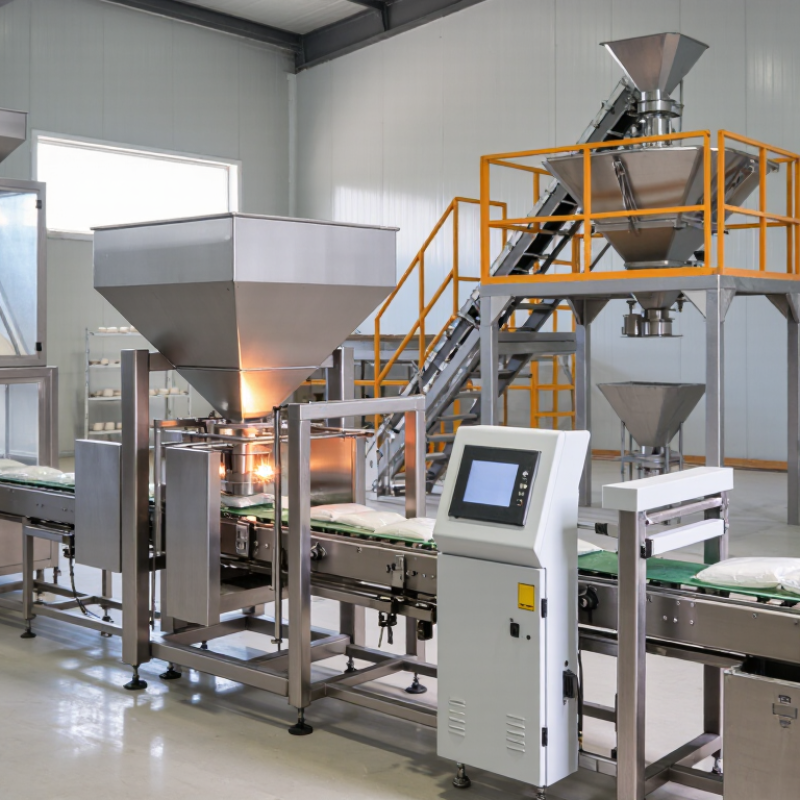
Define Output Needs: 5–30 Bags/Min and 5–50 kg Pack Sizes
A small automatic flour packing line should begin with output needs, not machine size.
For many workshops, 5–30 bags per minute is a realistic range. The correct speed depends on bag weight, flour flow, and operator handling. A 5 kg bag may reach the higher rate, while a 50 kg bag needs slower filling and stronger sealing support. Trial tests matter because flour density can change between batches.
Select a weighing system that matches the required accuracy. For 5–10 kg packs, frequent calibration helps control giveaway. Larger 25–50 kg bags need stable scales, firm bag holding, and enough space for manual inspection. Dust extraction is also important. Flour can cover sensors, sealing areas, and nearby floors within minutes. In real installations, poor cleaning access often causes more downtime than filling speed. This is easy to underestimate.
Tips:
Test three bag sizes before purchase. Record filling time, weighing error, dust buildup, and sealing quality. Leave space around the conveyor for cleaning. A practical mistake is designing for the maximum rate only. The line may run quickly, but operators still need time to place bags, remove full sacks, and check seams. A slightly lower speed can produce steadier output and fewer rejected packages. Expect adjustments. Real flour rarely behaves exactly like a factory sample.
Choose a Weighing Filler with ±0.2–0.5% Packing Accuracy
For a small automatic flour packing line in China, choose a weighing filler rather than relying only on volume. Flour density changes with milling, humidity, and pneumatic conveying. A 1 kg bag may therefore gain or lose several grams without any obvious mechanical fault.
An accuracy target of ±0.2–0.5% equals approximately ±2–5 g per bag.
That sounds precise. It is not always easy.
FAO’s Food Outlook 2024 places global wheat production at roughly 790 million tonnes, showing the scale and consistency demanded by modern flour handling. On a small line, test at least 30 consecutive bags after warm-up. Record the average weight, standard deviation, and rejected bags. Use certified test weights before each shift, then repeat calibration after changing flour type or pack size.
A load-cell filler with controlled screw feeding usually handles these changes better than a simple volumetric system.
Keep the hopper level stable, because an uneven feed can create hidden variation.
During factory acceptance testing, ask the supplier to simulate real flour, including dust and product aeration. Check the filler, auger, dust collector, sealing unit, and checkweigher together.
OIML R 61-1:2017 provides useful guidance for automatic gravimetric filling instruments, but compliance alone does not guarantee your daily result. I would not promise ±0.2% before site trials. In practice, humidity, operator cleaning, and inconsistent flour flow may widen the result. That is where careful records matter.
Map the Line: Feeding, Weighing, Bagging, Sealing, and Conveying
How to Set Up a Small Automatic Flour Packing Line in China?
Map the line before buying equipment: feeding, weighing, bagging, sealing, and conveying. Begin with a stainless-steel hopper and an enclosed screw feeder. Its agitator should prevent flour bridging, while dust extraction protects operators and keeps the weighing area clean. A load-cell weigher then measures each batch accurately. For small bakeries, 500 grams to 5 kilograms is a practical range, but the product’s moisture and flowability can change performance.
The bagging section may use pre-made bags or a vertical form-fill-seal unit. Pre-made bags simplify changeovers. Film forming usually saves labor and floor space. After filling, heat sealing must create a flat, continuous seam without trapping flour. It sounds simple. It is not. Even a small powder particle can weaken the seal. A short conveyor should move sealed bags toward inspection, carton packing, or manual collection. Keep the transfer height low to reduce dust and bag damage.
FAO’s 2023 Food Loss Index estimates that 13.2% of food is lost before retail globally. Reliable weighing and sealing can help reduce avoidable product loss, although packaging alone cannot solve it. PMMI’s 2024 packaging machinery report highlights labor availability and automation integration as continuing industry concerns. In China, local service access, electrical compatibility, cleaning routines, and spare-part availability deserve equal attention. The first layout is rarely perfect. Test flour under real humidity conditions, record seal failures, and revise the line before full production.
Install a 380 V/50 Hz System with Dust-Controlled Flour Handling
How to Set Up a Small Automatic Flour Packing Line in China?
A small automatic flour packing line needs a stable 380 V, 50 Hz power supply. Confirm the workshop’s incoming voltage before selecting equipment. A qualified electrician should install the main cabinet, overload protection, and emergency stop circuit. Use separate grounding for the frame, conveyor, and control cabinet. This simple step is often overlooked.
Flour should move through enclosed hoppers, flexible connections, and sealed feeding points. A local dust collector can capture fine particles near the filling nozzle and bag-closing area. Keep inspection doors tightly sealed, but allow quick access for cleaning. The packing scale should stand on a firm, level floor. Even a small vibration can affect filling accuracy. Operators should check actual bag weights during each shift, not only trust the display.
Tips: Keep the air clean. Use food-contact materials. Inspect filters weekly. Do not sweep flour dust into corners; use suitable industrial cleaning equipment. Ask an experienced technician to test the complete line under load before production. In practice, the first test may reveal unstable feeding or uneven sealing. That is normal, but it should be recorded and corrected before regular operation. Leave enough space around the machine for maintenance and safe movement. Local electrical and workplace requirements should also be verified before installation.
Commission the Line and Verify Weight, Sealing, and Food-Safety Standards
Commissioning a small automatic flour packing line in China requires more than switching on the power. Begin with a dry run, then test the machine using the actual flour and bag material. Check the auger, hopper, conveyor, and dust collection system. Flour can bridge inside the hopper, especially when humidity changes. Record every setting, including filling speed, vibration time, and target weight.
Use certified test weights to verify the weighing system before production. Take at least ten finished bags from different points in the run. Weigh them with a calibrated scale and compare the results with the approved tolerance. The first test may not pass. That is useful evidence, not a failure to hide. Adjust the filling cycle, then repeat the test until the results remain stable. Keep signed records with the date, operator, batch, and equipment condition.
Inspect every seal by sight and touch. A good seal should be continuous, clean, and free from flour particles. Pull-test several bags and check for leakage. Inspect contact parts for smooth, cleanable surfaces and suitable food-contact materials. Remove oil, metal fragments, and loose fasteners before trial production. Ask the supplier for material documents, cleaning instructions, and calibration records. Confirm the line meets applicable Chinese food-packaging requirements and the destination market’s rules. Do not rely only on a verbal promise. A short production trial often reveals problems that a factory demonstration misses.
Conclusion
Setting up a small scale automatic flour packing line begins with defining the required production capacity and package sizes. A practical target may range from 5 to 30 bags per minute, with filling quantities between 5 and 50 kg. Select a weighing filler that can consistently achieve approximately ±0.2–0.5% packing accuracy, then organize the workflow in a logical sequence: flour feeding, weighing, bagging, sealing, and conveying. This layout helps reduce material loss, improve efficiency, and simplify daily operation.
The line should use a suitable 380 V/50 Hz electrical system and include dust-controlled flour handling to support a cleaner, safer working environment. During commissioning, test the weighing system, confirm stable bag formation and sealing, and inspect the conveyor transfer process. Operators should also verify product-contact hygiene, equipment cleaning procedures, emergency protections, and applicable food-safety requirements before regular production begins. With careful planning and adjustment, how to set up a small scale automatic flour packing line can be approached efficiently and reliably.

 Jiujie Machine