Industrial flour milling is a controlled separation process, not a single screening step. Wheat kernels pass through roller mills, sifters, and purifiers. Each stage gradually loosens bran from the endosperm while limiting damage to the flour. In practice, operators watch the roll settings, airflow, and the fine stream of material leaving each sieve. Small changes matter.
The scale is significant: FAOSTAT records about 808 million tonnes of wheat produced worldwide in 2022. That figure describes crop production, not flour output, but it shows why dependable milling methods matter. Cereal scientist R. C. Hoseney’s work offers a useful principle, paraphrased here rather than presented as a direct quotation: “Separate the bran while protecting the endosperm.” The distinction is important. Aggressive grinding can darken flour with bran fragments; overly gentle treatment may leave valuable endosperm attached to the bran. Results also vary with wheat type, moisture, and mill settings, so there is no single perfect adjustment.
This guide explores how do industrial flour mills handle bran separation, from conditioning and break rolls to sifting and purification. It focuses on what each stage does, which details millers monitor, and where trade-offs arise. Some process descriptions simplify a complex operation; actual mill layouts differ. The goal is a practical, evidence-conscious overview—not a claim that every mill works identically.
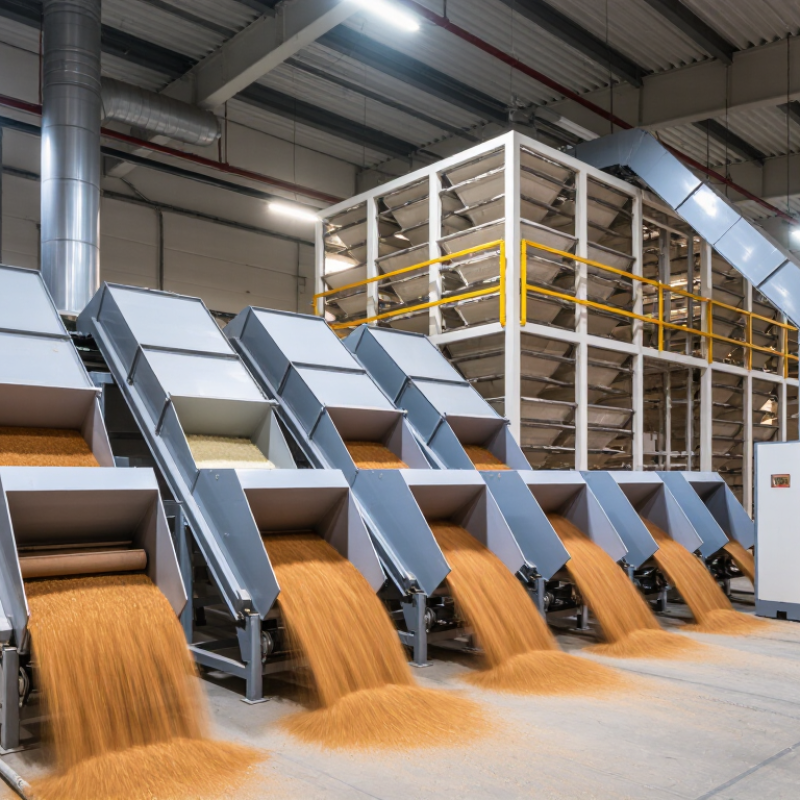
Industrial mills release bran gradually, rather than peeling it away in one pass. Corrugated break rolls open the wheat kernels while limiting damage to the outer layers. Sifters then separate coarse bran flakes from smaller endosperm particles. The remaining material returns through later roll-and-sift cycles, where finer screens and controlled grinding free more flour from the bran.
Air currents and purifiers help sort particles by size, density, and shape. Bran flakes are relatively broad and light; endosperm fragments are denser. The separation is not perfectly clean. Too much pressure can shred bran into small specks that pass through screens, while gentle grinding may leave usable endosperm attached. USDA FoodData Central lists crude wheat bran at about 42.8 grams of dietary fiber per 100 grams, illustrating why even small bran fragments can affect flour composition. Millers monitor sieve results and flour ash levels, adjusting roll gaps and airflow as wheat changes from lot to lot. The boundary is messy. A practical target is consistent separation, not a flawless peel.
Preparing and tempering wheat sets up clean bran separation long before the first break roll. Posner and Hibbs’ technical reference, Wheat Flour Milling (2005), describes conditioning wheat to about 15–17% moisture, with the target and resting time adjusted for kernel hardness and mill conditions. Water is added in controlled amounts, then the grain rests so moisture can move inward from the outer layers. The aim is practical: tougher, more flexible bran and an endosperm that fractures more readily.
It takes patience. A damp kernel surface can mislead operators; moisture needs time to distribute through the grain. Mills commonly condition for several hours, and harder wheat may require a longer rest. A useful check is to compare incoming and post-tempering moisture readings, then inspect kernels for evenness before milling. The figures are operating ranges, not a universal recipe. Posner and Hibbs emphasize that wheat class and equipment affect conditioning choices. Even experienced teams can overfocus on one target number. That deserves a second look: inconsistent grain lots may respond differently, so records and small, measured adjustments matter more than assumptions.
Top Ways Industrial Flour Mills Separate Bran
Break rolls begin the separation process by opening wheat kernels without turning them entirely into flour. Their grooved steel surfaces grip the grain and crack it as the rolls rotate at different speeds. The aim is controlled breakage: expose the starchy endosperm while keeping bran pieces as large as practical. Those pieces are easier to remove later with sieves and air currents. A clean crack matters. Too much pressure can shred bran into small flakes that pass through screens with the flour. Too little leaves kernels partly closed, sending useful endosperm onward with the bran.
Tips: Watch the roll gap, feed rate, and grain condition together. Tempered wheat usually has tougher, more flexible bran and a brittle endosperm. Check the sifted streams, not just the roll settings. Small changes can shift the balance.
In practice, millers adjust each break passage based on what the equipment produces. They inspect bran size, flour yield, and the material moving to the next stage. There is no single setting for every wheat lot; kernel size and moisture can vary. A little unevenness remains, even with careful control. That is worth acknowledging: aggressive grinding may improve apparent extraction, but it can also increase bran fragments in the flour. Gentle, staged opening gives downstream sifters a better chance to separate the parts cleanly.
| Stage or Dimension | Typical Data or Practice | How It Helps Separate Bran | Important Operating Note |
|---|---|---|---|
| Wheat kernel composition | The endosperm makes up roughly 80–85% of a wheat kernel; bran layers about 13–17%; and germ about 2–3%. | These fractions explain why the mill aims to release endosperm while keeping bran in large, recognizable flakes. | Percentages are approximate and vary with wheat variety, growing conditions, and measurement method. |
| Cleaning before milling | Screening, aspiration, and other cleaning operations remove material such as dust, chaff, stones, and metal before the wheat reaches the rolls. | Clean wheat feeds more consistently and helps protect roll surfaces and downstream separation equipment. | Cleaning equipment and sequence are selected for the incoming grain and the mill’s process design. |
| Wheat conditioning (tempering) | Water is added and allowed to distribute through the kernels. A conditioned moisture level around 15–17% is common in many milling processes; tempering may take several hours or longer. | Moisture toughens the bran and makes it more flexible, while the endosperm becomes easier to fracture during milling. | Target moisture and rest time depend on wheat hardness, incoming moisture, temperature, and the mill’s system. |
| First-break rolls | A pair of fluted rolls runs at different surface speeds. A differential speed ratio around 2.5:1 to 3:1 is common in roller-milling practice. | The rolls crack open kernels and scrape or peel endosperm away from the bran rather than pulverizing the whole kernel at once. | Roll gap, flute condition, feed rate, and speed are adjusted to the wheat and the desired degree of opening. |
| Break-system progression | Several break passages are commonly used, with material separated and assessed between passages. | Gradual reduction releases more endosperm while limiting the creation of fine bran particles that are harder to remove from flour. | Each passage is set to work on the material received from the preceding passage; settings are not universal. |
| Sifting after break rolls | Plansifters or other screening equipment sort roll output by particle size into streams such as coarse bran, middlings, and finer material. | Large bran flakes can be separated from smaller endosperm-rich particles for further processing. | Screen openings and sieve arrangements depend on the mill’s flow design and product specifications. |
| Purification of middlings | Purifiers combine sieving with controlled airflow to classify granular particles by size and apparent density. | They help remove bran specks from endosperm-rich middlings before those particles are reduced on later rolls. | Airflow must be balanced: excessive air can carry away usable endosperm, while insufficient air can leave bran in the stream. |
| Bran-rich by-product | The bran-rich stream contains bran layers and may retain some attached endosperm; its final composition depends on the milling diagram and finishing operations. | Keeping bran flakes relatively large makes it easier to separate them from the finer endosperm particles. | The bran-rich output is not identical to the kernel’s anatomical bran percentage because it can include moisture and attached endosperm. |
| Overall flour extraction context | White-flour extraction is often approximately 72–76% of cleaned wheat by weight in conventional milling, though actual rates vary. | Extraction reflects how much of the kernel is recovered as flour while bran-rich and other streams are separated. | Wheat quality, flour grade, ash limits, and mill settings all affect the achieved rate. |
Note: Values shown are general industry references, not fixed specifications. Actual roll settings, moisture targets, and separation results vary with wheat characteristics and mill design.
Industrial flour mills use sieves and controlled airflow to separate bran from finer endosperm. A vibrating sieve deck moves the milled grain across mesh openings of different sizes. Bran flakes are generally larger, so they remain above the mesh while smaller particles pass through. Too much vibration can break flakes into smaller pieces. Small shifts matter.
Airflow helps remove light bran fragments that sieving alone may miss. Fans lift these particles into an air channel, while heavier flour falls into a collection area. Operators adjust air speed to avoid carrying good flour away with the bran. Moisture complicates the process because damp particles can cling together. It can cling. No setting works perfectly for every batch, and operators may need to inspect the flour and adjust the equipment as grain conditions change.
Tips: Check sieve surfaces for worn or blocked mesh. Watch the airflow outlet for flour loss, not just visible bran. Record adjustments during each run; otherwise, a useful change can be hard to repeat.
At an industrial flour mill, bran recovery depends on controlled reduction and separation. Roller gaps crack the wheat kernel while limiting damage to the endosperm. Plansifters then sort particles by size, and aspiration lifts lighter material from heavier streams. The bran flakes should look broad and pale, not powdered. Small losses matter.
Checking the recovered fraction takes more than visual inspection. USDA FoodData Central lists about 42.8 grams of dietary fiber per 100 grams of wheat bran. That figure describes composition, not mill yield. AACC International’s standardized ash method can help detect mineral-rich bran carryover in flour, while sieve tests track particle size. Moisture checks matter too; damp bran can clump and distort screening results.
A practical sampling routine collects bran from several points across a shift, rather than relying on one clean sample. Operators can compare sieve fractions, ash, and moisture with the mill’s own baseline. Near-infrared readings may speed routine checks, but questionable results need confirmation with reference laboratory methods. The imperfect part is unavoidable: wheat variety and kernel condition change from lot to lot. Records should show those changes, not hide them.
Representative approximate composition of wheat bran on a dry-weight basis.
Dietary fiber is the largest component, while protein, starch, fat, and ash make up smaller fractions. Values are rounded illustrative estimates; actual composition varies with wheat variety, growing conditions, and milling settings.
Corrugated rolls crack open the kernels without removing the outer layers in one pass. Sieves and airflow then separate bran from smaller, denser endosperm particles.
Each cycle frees more flour from bran. Later stages use finer screens and controlled grinding. One pass would not separate everything cleanly.
Vibrating mesh lets smaller particles pass through while larger flakes stay above it. Too much vibration can break flakes into specks.
Fans lift light bran fragments into an air channel while heavier flour falls into a collection area. Operators watch for flour being carried away.
Damp particles may cling together and pass through equipment as clumps. It can cling. Settings may need to change with each batch.
Not always. Fine bran can pass through screens, while gentle grinding may leave endosperm attached to bran. The boundary stays messy.
They inspect sieve results and flour ash levels, then adjust roll gaps or airflow. Worn or blocked mesh also needs checking.
Wheat bran contains about 42.8 grams of dietary fiber per 100 grams. Even small fragments can change flour composition, so perfect separation may not be practical.
Industrial flour mills separate bran through a carefully controlled sequence that begins before the wheat is milled. The grain is cleaned and tempered with moisture so the outer layers become more flexible while the inner endosperm can be released efficiently. Break rolls then gently open the wheat kernels, aiming to loosen the bran without grinding it into the flour.
Screens and airflow sort the milled material by size and weight. Bran flakes are separated from finer particles, while the remaining mixture passes through additional milling and sifting stages. To understand how do industrial flour mills handle bran separation, it helps to see the process as repeated opening, sorting, and refining rather than a single step. Mills recover bran fractions, check them for consistency, and adjust equipment settings when needed. This approach helps produce flour with the desired refinement while keeping useful bran material separate.

Jiujie Machine