Choosing the 2026 best flour purifier begins with a practical question: what is the role of a purifier in flour milling? It cleans and grades semolina after the first reduction passages. The machine uses controlled airflow, vibration, and sieving to separate bran fragments from endosperm particles. A clean separation can improve flour color, ash performance, extraction stability, and downstream baking consistency. It is not a magic box.
Global wheat processing makes this decision significant. The USDA Wheat Outlook and FAO Food Outlook regularly report annual world wheat production above 800 million metric tons. Such scale increases pressure on mills to protect yield while meeting stricter quality expectations. IAOM technical guidance also emphasizes balanced milling flows, correct aspiration, and careful product control. A purifier operates between these priorities. Excessive air may remove valuable flour. Insufficient air may leave dark bran specks.
Modern models commonly include adjustable air channels, sealed inspection doors, stainless-steel contact surfaces, and sensor-ready controls. Some systems monitor feed rate, airflow, and motor load. These features support cleaner operation and more repeatable results. However, published specifications can look better than real mill performance. Wheat variety, moisture, roller settings, screen condition, and operator skill still matter. That part is easy to underestimate.
A reliable selection should compare separation efficiency, energy use, cleaning access, noise, spare-parts support, and validated test results. The best purifier is not always the largest machine. It is the unit that fits the mill’s actual flow sheet and product targets. Independent trials remain essential before investment. Industry reports provide useful direction, but they cannot replace flour testing on your own wheat.
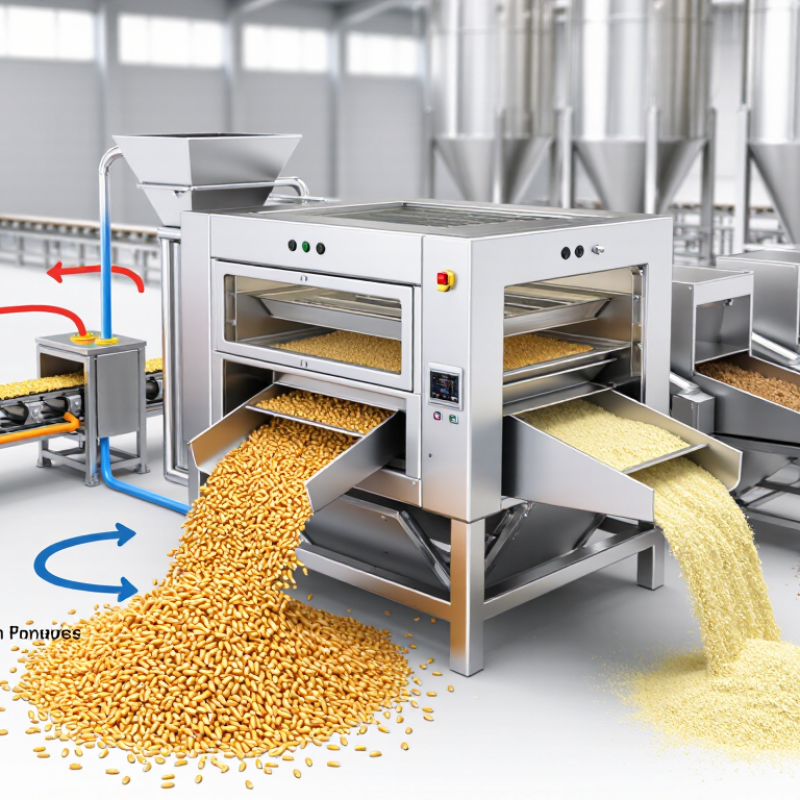
2026 Best Flour Purifier: What Is Its Role in Milling?
A flour purifier separates fine endosperm particles from bran and germ fragments. It works after roller milling, when the wheat kernel has become granular middlings. The machine uses controlled airflow and layered sieves. Lighter bran particles move away, while heavier endosperm particles fall through selected screens. The cleaned middlings then return to reduction rolls for finer flour.
This step matters because wheat quality is rarely uniform. FAO’s Food Outlook has placed recent global wheat production forecasts near 790 million tonnes. The International Grains Council has also estimated total wheat supply above one billion tonnes in recent market reports. Such scale makes small separation losses expensive. A well-adjusted purifier can improve flour brightness, reduce bran specks, and support more consistent ash levels. It cannot repair damaged wheat. That limitation is often overlooked.
Tips: Check airflow, sieve condition, and feed rate together. A strong fan is not automatically better. Excessive air may carry useful endosperm away. Weak airflow leaves dark particles behind. Operators should compare laboratory ash results with visual inspection and screen performance. Moisture, temperature, and wheat variety also change purifier behavior. In practice, the best setting may require several trials. Milling is precise, but not perfectly predictable.
A flour purifier uses controlled air flow and sieving to separate fine endosperm particles from bran particles. Lower ash content generally indicates less bran contamination, which helps produce cleaner, brighter flour. The values shown are representative wheat-milling levels; actual results vary with wheat variety, moisture, roller settings, and purifier operation.
A flour purifier is a key machine in modern wheat milling. Its main task is separating semolina from bran and germ before further reduction. After the break rolls open the wheat kernel, the mixture contains clean endosperm particles, bran flakes, and germ pieces. These materials differ in size, shape, density, and surface texture.
Inside the purifier, sieves classify the particles while a controlled air stream lifts lighter bran and germ. Heavier semolina falls through the sieve and moves toward the reduction system. The airflow must remain balanced. Too much suction can remove valuable endosperm, while weak airflow may leave bran in the semolina. Operators often inspect the product under bright light and check particle size during each shift.
Good purification depends on wheat moisture, sieve condition, feed rate, and air pressure. A damaged screen can quietly reduce yield. Excessive moisture may also make bran less brittle and harder to separate. The process is not flawless. Some germ fragments remain attached, especially when wheat quality changes. For this reason, experienced millers compare laboratory results with the machine’s daily performance. They may adjust the air gate or replace a screen rather than trust one fixed setting. Clean passages, stable feeding, and regular sampling help produce semolina with better color, lower bran contamination, and more predictable milling behavior.
| Data Dimension | Typical Milling Information | Role of the Flour Purifier | Effect on Flour Quality and Yield |
|---|---|---|---|
| Main Separation Objective | Separate clean, granular semolina from lighter bran particles and germ fragments. | Uses controlled air classification and sieving to divide particles according to density, size, and aerodynamic behavior. | Improves the purity of semolina before it is reduced into refined flour. |
| Typical Material Feed | Intermediate stock from the break and reduction systems, commonly containing semolina, middlings, bran, germ, and flour. | Receives stock that has already been size-reduced but still contains adhering bran or germ particles. | Allows valuable endosperm particles to be recovered instead of being discarded with bran. |
| Primary Separation Principle | Combined screening and aspiration. | Screening separates by particle size, while airflow separates particles by density, shape, and terminal velocity. | Produces cleaner semolina and reduces the transfer of bran into reduction passages. |
| Relative Particle Behavior | Semolina is generally denser and more granular; bran is lighter, flatter, and more irregular; germ is relatively dense but often oily and irregular. | Adjusts airflow so lighter bran and fine impurities are lifted while heavier endosperm-rich particles fall through the screen. | Supports more consistent purification when particle size and moisture are properly controlled. |
| Screening Surface | Multiple screen sections with different mesh openings are selected according to the stock being processed. | Classifies particles into coarse bran, purified semolina, fine middlings, and flour-sized fractions. | Improves product separation and permits different fractions to be routed to appropriate milling passages. |
| Airflow Requirement | Airflow must be strong enough to remove light particles but gentle enough to retain good semolina. | Uses an adjustable aspiration zone or air channel to control the lifting force across the product layer. | Excessive air can cause endosperm loss; insufficient air can leave bran contamination in the semolina. |
| Airflow Control Factors | Air velocity, air volume, pressure balance, feed rate, product depth, and stock moisture. | Operators fine-tune the air setting and feed distribution for each stock type. | Stable control improves purification consistency and reduces unnecessary energy use. |
| Typical Product Streams | Purified semolina, bran-rich fraction, germ-containing fraction, fine middlings, and flour-sized material. | Directs each stream to a suitable destination, such as reduction rolls, bran collection, or further classification. | Enables targeted processing and helps maintain predictable flour extraction. |
| Semolina Purity | Depends on wheat variety, tempering, break release, particle-size distribution, screen selection, and airflow setting. | Removes bran specks and light impurities attached to or mixed with semolina. | Higher-purity semolina generally supports lighter flour color and lower ash in the corresponding flour stream. |
| Effect on Bran | Bran is separated into heavier flakes and lighter fragments according to size and aerodynamic properties. | Prevents excessive bran from entering fine reduction passages. | Reduces bran speck contamination and helps preserve the value of clean bran by-product. |
| Effect on Germ | Germ may occur with fine middlings or bran because of its irregular shape and relatively high oil content. | Separates germ-containing material as far as practical through size classification and aspiration, depending on the milling design. | Helps limit oil-rich germ material in refined flour, which can support storage stability. |
| Moisture Influence | Wheat tempering changes bran toughness, endosperm friability, particle adhesion, and stock flowability. | Processes better-tempered stock with more distinct bran and endosperm behavior. | Appropriate conditioning can improve separation efficiency, flour color, and extraction stability. |
| Feed Uniformity | A steady, evenly distributed feed is essential for consistent separation. | Distributes stock across the full working width and maintains an even product layer. | Reduces local overloading, uneven purification, and fluctuations in flour quality. |
| Capacity Consideration | Capacity is determined by screen area, feed depth, stock characteristics, and the required purification level. | Must be sized for the intended wheat throughput without excessive loading. | Overloading can reduce separation accuracy and increase endosperm loss with the bran fraction. |
| Energy Use | Energy is mainly associated with screen movement, air movement, and the wider milling system. | Uses controlled aspiration rather than relying only on mechanical screening. | Correct airflow settings can balance purification performance with fan power consumption. |
| Key Quality Indicators | Ash content, bran specks, moisture, particle-size distribution, flour color, and extraction rate. | Provides a process point for improving the cleanliness of semolina and middlings. | Helps millers maintain stable flour specifications and reduce quality variation. |
| Common Causes of Poor Separation | Uneven feed, incorrect screen selection, unsuitable airflow, excessive moisture, worn screens, or blocked air passages. | Requires routine inspection, cleaning, airflow checks, and adjustment of screen and feed settings. | Poor settings may increase bran carryover, reduce yield, or send usable endosperm to the by-product stream. |
| Best Operating Practice | Match screen configuration and air settings to wheat type, tempering condition, stock size, and product target. | Combines mechanical classification with controlled aspiration rather than using one separation method alone. | Delivers a practical balance among semolina purity, flour yield, energy consumption, and process stability. |
Note: Actual performance varies with wheat variety, tempering conditions, stock characteristics, screen configuration, airflow settings, and overall mill design.
In modern milling, a flour purifier separates clean endosperm particles from bran and germ fragments. It usually works after roller milling and before final reduction. The machine uses controlled airflow and sieving to classify ground material by weight, size, and surface texture. Light bran particles move away, while heavier semolina settles for further processing.
A well-adjusted purifier can improve flour color, texture, and extraction consistency. Mill operators watch the feed rate, sieve condition, airflow, and product moisture every shift. Small changes matter. Excessive air may carry useful flour away with bran. Weak airflow may leave dark particles in the semolina. Practical testing with a sample tray often reveals problems faster than relying on settings alone.
Purifier performance also depends on wheat quality and milling design. Hard wheat, soft wheat, and mixed batches respond differently. A purifier cannot correct poor cleaning or badly conditioned grain. It is not a magic box. In some mills, operators focus too much on maximum extraction and overlook flour ash content. That choice can reduce color quality and complicate later blending. Regular inspection remains essential, because worn screens and uneven distribution quietly reduce efficiency. The best setting is rarely permanent; it must follow the grain.
A high-quality flour purifier separates fine endosperm from bran particles after grinding. Its role is simple but important: cleaner middlings can produce lighter, more consistent flour. In 2026, the best purifier should offer adjustable airflow, precise screening, and stable material distribution. A clear inspection window helps operators see blocked screens or uneven feeding. Small details matter.
Modern purifiers may include low-energy fans, dust-control systems, and sensors for temperature or pressure changes. Food-contact surfaces should resist corrosion and allow quick cleaning. Easy screen replacement also reduces downtime during busy milling periods. Still, “best” depends on wheat type, moisture, and mill capacity. A setting that works for hard wheat may perform poorly with softer grain. Real production trials remain necessary, even with advanced controls. I have found that operators sometimes trust displays too much; flour quality still needs regular laboratory checks and visual inspection.
Tips: Begin with moderate airflow and adjust it slowly. Check the purifier after each product change. Look for bran specks in the purified stream and excessive flour in the waste outlet. Record screen sizes, feed rates, and moisture levels. These notes reveal patterns over time. Clean internal passages daily, but avoid rushing the process. A neglected corner can affect an entire shift.
Selecting a flour purifier starts with the flour’s intended quality, not the machine’s advertised capacity. In milling, the purifier separates bran particles from middlings through controlled air and sieving. This improves color, ash control, and flour consistency. Measure your feed rate, wheat hardness, moisture, and available floor space before comparing models. A unit sized for peak output may perform poorly at low loads. That detail is easy to miss. Choose adjustable airflow, accessible screens, and inspection windows. Screen area should match the particle range you actually produce.
During commissioning, test several airflow settings with a small, representative sample. Record purifier speed, air pressure, feed rate, and product appearance. Experienced millers look for clean middlings, limited flour loss, and stable discharge. If bran remains mixed, increase separation gradually rather than forcing maximum suction. Excessive air can carry valuable endosperm into the tailings. Keep a simple log. Maintenance should begin with daily cleaning around screens, ducts, and aspiration points. Fine dust can hide blocked passages and uneven feeding. Inspect screen tension, seals, bearings, and adjustment controls weekly, based on operating hours. Replace damaged mesh promptly.
Calibrate airflow gauges and check product samples at fixed intervals. Compare color, texture, sieve results, and laboratory ash testing when available. Do not trust appearance alone. Humid grain, dusty rooms, and heavy use shorten maintenance intervals. One weakness is relying on fixed settings after wheat conditions change. Review records and make small corrections. Keep safety guards fitted, and isolate power before cleaning or servicing. Record every adjustment beside the batch number.
A flour purifier separates fine endosperm from bran and germ fragments. It works after roller milling. Cleaner middlings can produce lighter, more consistent flour.
The machine combines controlled airflow with layered sieves. Lighter bran moves away, while heavier endosperm falls through selected screens. The cleaned middlings return to reduction rolls.
It can reduce bran specks and support steadier ash levels. It also improves flour brightness. Small losses matter at large milling volumes.
No. A purifier cannot repair damaged wheat. It only separates particles already produced during milling. This limitation is easy to overlook.
Begin with moderate airflow and change it slowly. Strong suction is not always better. Excessive air may carry useful endosperm into the waste outlet.
Useful features include adjustable airflow, accurate screening, and stable feeding. An inspection window helps reveal blocked screens. Sensors can show pressure or temperature changes.
Match the machine to feed rate, wheat hardness, moisture, and floor space. Capacity alone is not enough. A large unit may perform poorly at low loads.
Clean screens, ducts, and air passages daily. Inspect seals, bearings, screen tension, and controls regularly. Replace damaged mesh promptly. Fine dust hides problems.
Compare product appearance, sieve results, and laboratory ash readings. Inspect the purified stream for bran specks. Check the waste outlet for excessive flour. Appearance alone can mislead.
Fixed settings may fail when moisture or wheat variety changes. Uneven feeding can also weaken separation. I sometimes trust instrument readings too much. Regular sampling remains necessary.
A flour purifier is a key milling machine designed to improve the quality and consistency of refined flour. It uses controlled airflow, vibration, and sieving to separate lighter bran and germ particles from heavier semolina and endosperm. This process allows millers to recover clean, uniform middlings while reducing impurities and protecting the color, texture, and baking performance of the final flour. In modern milling, the answer to “what is the role of a purifier in flour milling” lies in its ability to enhance separation efficiency, increase product value, and support stable production.
The best flour purifier in 2026 should offer precise airflow control, efficient screening, durable construction, low energy consumption, and easy access for cleaning and inspection. Selection should consider processing capacity, wheat characteristics, available space, and compatibility with the milling system. Regular maintenance, including screen cleaning, airflow checks, vibration inspection, and timely replacement of worn parts, helps preserve performance and extend service life.

Jiujie Machine